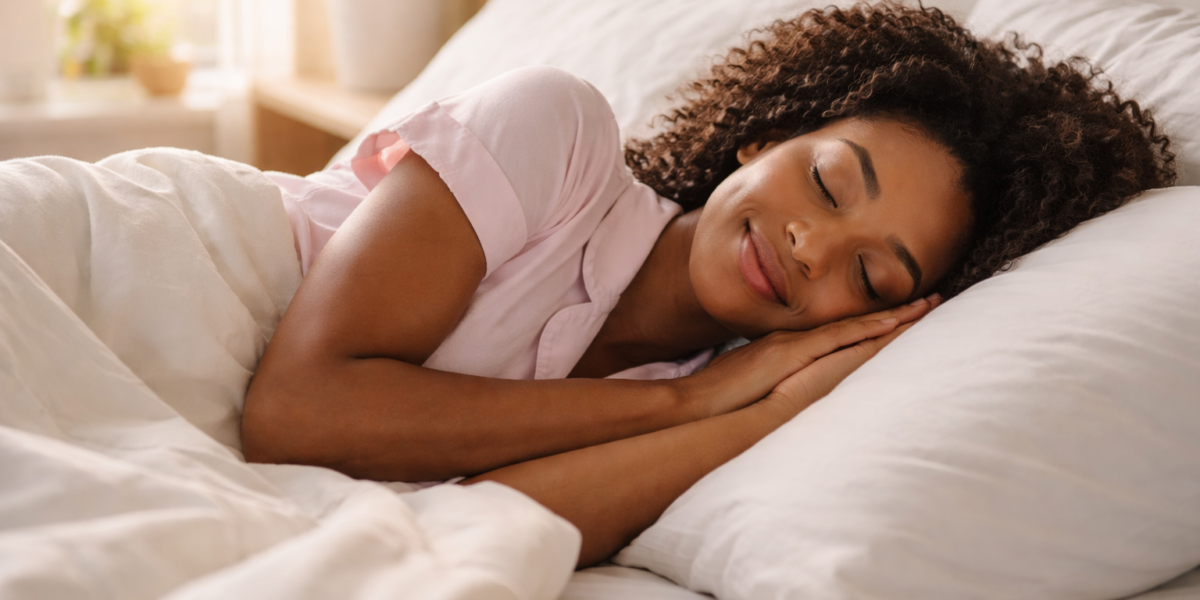
“I didn’t sleep well last night.”
If I had a shilling for every time I heard that at the gym, I’d probably have installed a nap pod by now. Poor sleep has become so common that we almost treat it like a badge of honor. We joke about running on caffeine, scrolling till midnight, or “catching up on sleep” over the weekend (does that really work?). But beneath the jokes is a real problem, chronic poor sleep is quietly stealing our quality of life.
The Real Cost of Bad Sleep (It’s More Than Yawning)
When sleep suffers, nothing escapes the ripple effect. Your energy quietly crashes, moods become a bit unpredictable (your family can probably testify), and focus starts slipping through the cracks. Motivation fades, workouts feel harder than they have any right to, and recovery suddenly takes forever. Even stress feels heavier than usual, like you’re carrying an extra weight you never signed up for.
When sleep goes missing, everything else starts working overtime to compensate, and it never ends well.
fEEL FITNESS.
Science backs this up. Research shows that insufficient sleep affects hormone regulation, immune function, emotional control, and physical performance. Sleep deprivation increases cortisol (your stress hormone), disrupts appetite hormones, and reduces the body’s ability to recover and adapt to exercise.
In short: you’re not lazy, you’re tired.
Why Sleep and Exercise Are Best Friends (Not Enemies)
Many people assume exercise will make them more tired and worsen their sleep. In reality, when done right, exercise does the exact opposite, it improves sleep quality.
Regular physical activity helps the body spend more time in deep, restorative sleep, reduces anxiety and low mood, regulates the body’s internal clock, lowers stress hormones, releases muscular tension, and ultimately improves overall quality of life. In many ways, exercise acts like a natural sleep aid no prescription, no side effects, and thankfully, no strange dreams.
Feel fitness
I’ve seen this play out countless times in my own facility. Clients who arrive exhausted, irritable, and running on caffeine often expect workouts to drain them further. Yet after a few weeks of consistent, well-paced training, the feedback changes: “Coach, I’m sleeping better.” Not longer, better. Deeper. More refreshing. And when sleep improves, everything else begins to follow.
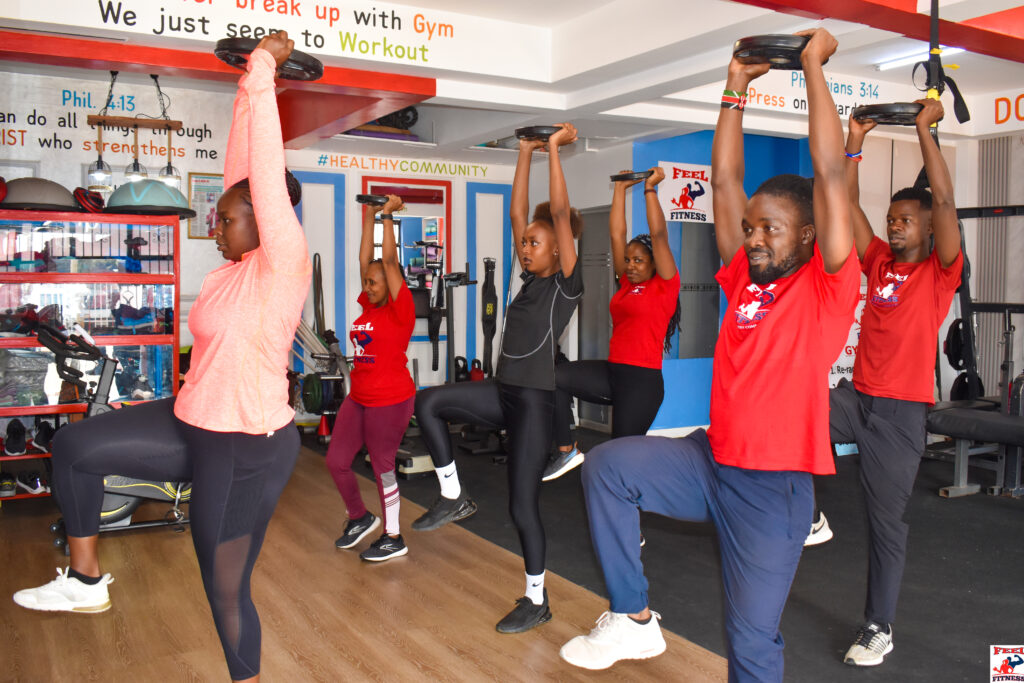
And no, this doesn’t require savage workouts that leave you crawling out of the gym. In fact, those often make sleep worse. The goal is not exhaustion, it’s regulation. When movement is intentional and consistent, the body learns when to be alert and when to rest.
Exercise That Helps You Sleep Better
Here’s what actually works:
1. Consistency beats intensity
Three to five moderate sessions a week are more effective than random heroic workouts followed by burnout. Consistency builds stronger habits, better recovery, sustainable results and a healthier relationship with exercise. Train smart. Train steady. Let fitness serve your life, not exhaust it.
2. Timing matters
Morning or afternoon exercise tends to improve sleep more than very late-night intense sessions (unless it’s light stretching or mobility). Daytime movement strengthens your natural sleep rhythm, helping your body know when to be alert and when to rest. Late-night high-intensity workouts, on the other hand, can confuse those signals by keeping your nervous system switched on when it should be powering down.
Gentle evening mobility, stretching, or breath-focused movement works so well. It supports relaxation, recovery, and a smoother transition into sleep. It’s not just whether you move, it’s when and how. Train with your biology, not against it.
Feel Fitness.
3. Strength + cardio is the magic combo
Resistance training improves sleep efficiency, helping you fall asleep faster, stay asleep longer, and spend more time in deep, restorative sleep. Your body craves recovery after strength work, which deepens rest. Aerobic exercise, on the other hand, supports stress reduction and mood balance. It lowers anxiety, releases feel-good endorphins, and helps regulate emotions, making it easier to unwind at night.
4. Recovery is part of training
Sleep isn’t separate from fitness, it’s where fitness actually happens.
Training is just the invitation. Sleep is where the body RSVPs and does the work.
I’ve had seasons where I trained hard, ate “clean”… and slept like a Nairobi matatu with a loose exhaust, short trips, lots of noise, no rest. Guess what followed? Plateaus, sore joints, low energy, and workouts that felt like punishment instead of progress.
No sleep = no recovery.
No recovery = no strength gains, no fat loss, no motivation, no mood.
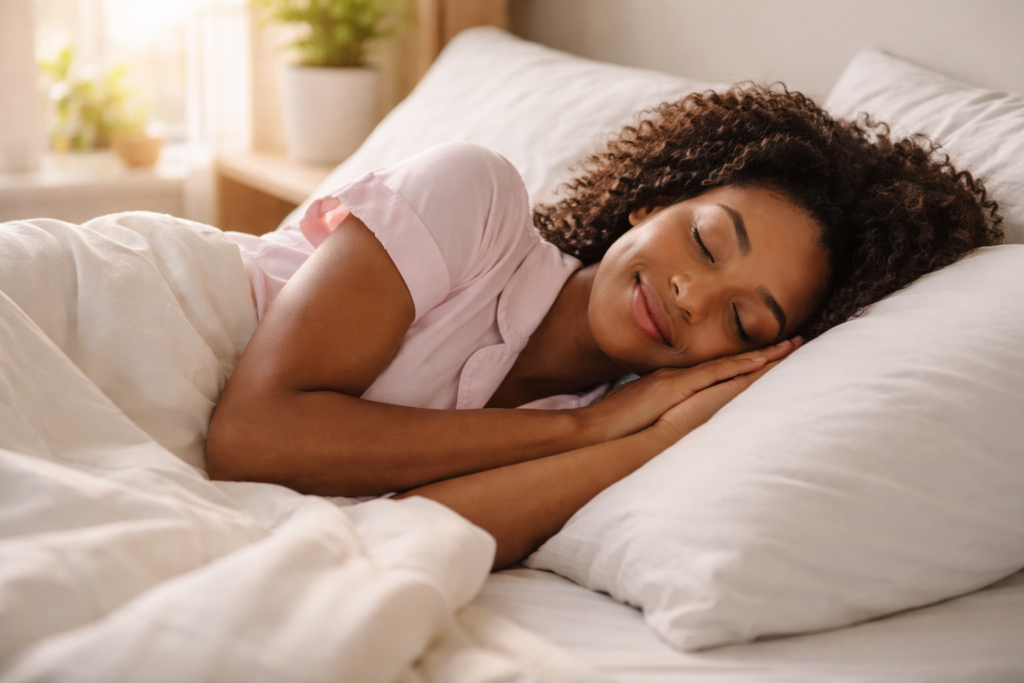
You don’t get fitter while lifting weights, you get fitter while sleeping after lifting weights. Muscles rebuild, hormones reset, the brain recovers, and tomorrow’s workout gets a fighting chance. So if you’re serious about fitness, take sleep seriously. Lights off is not laziness. It’s advanced training. Sleep well. Train smart. Progress will follow.
A Gentle Reality Check (With Love)
If your idea of “rest” is collapsing on the couch, scrolling endlessly, binge-watching till midnight, then wondering why you’re exhausted… you’re not alone. But that kind of rest doesn’t restore you. It’s like charging your phone with a broken cable. The screen lights up, but the battery never fills
Coach Cathy Afrobics.
Fixing the Problem Starts Small
You don’t need a perfect routine. You need simple, sustainable habits:
- Move your body most days
- Get sunlight early in the day
- Reduce screens before bed
- Respect sleep as a performance tool, not a luxury
Train your body during the day so your mind can rest at night.

Coach Phil’s Corner.
Quality sleep fuels quality living while quality movement supports quality sleep.
And when both are in place, life feels lighter, workouts feel better, and energy returns. You don’t need more coffee or more motivation, you need better rhythms.
Move well. Sleep better. Live better.